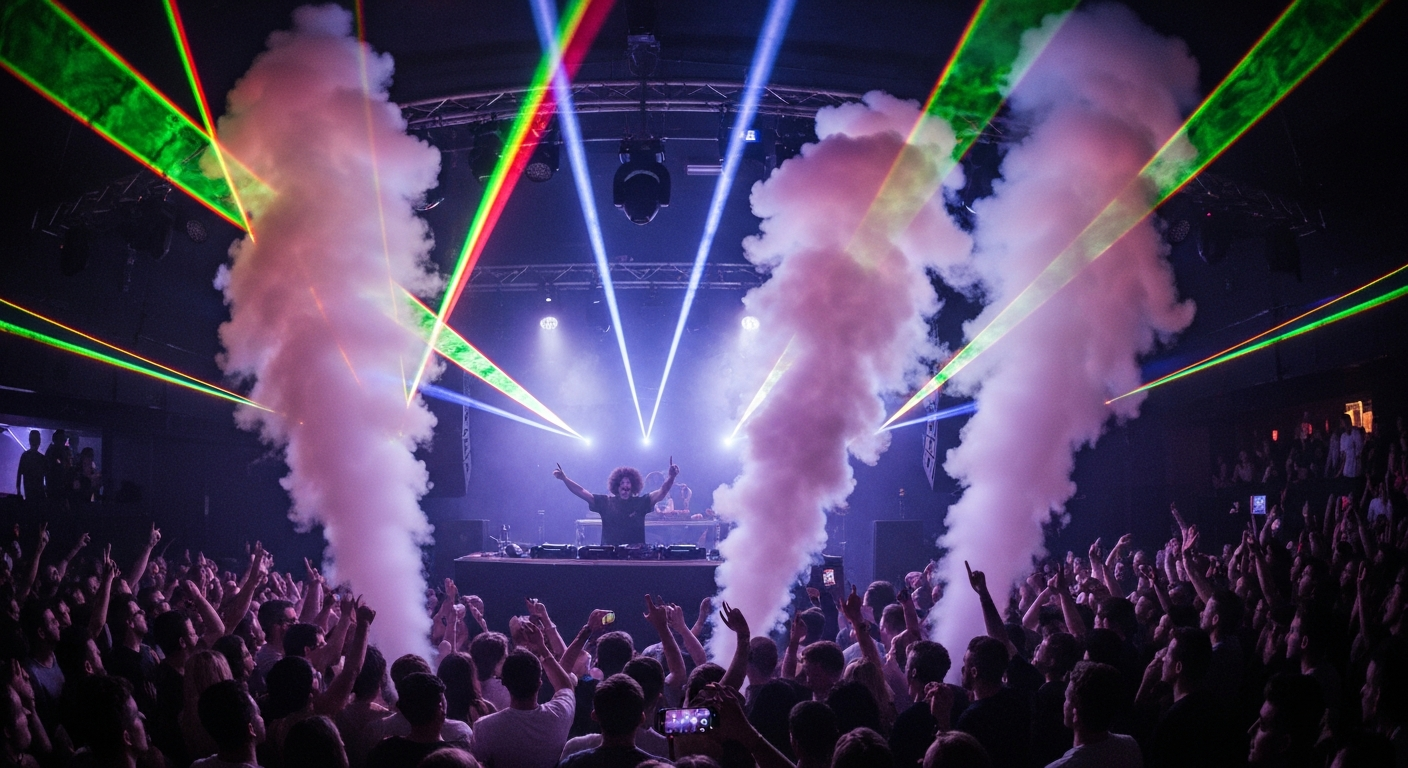
Electronic Hyperpop
COBRAH Brighton
Friday, May 29, 2026
20:00
Church St, Brighton and Hove, Brighton BN1 1UE, UK, Brighton, BN1 1UE
The Brighton Dome is more than just a concert hall; it’s a pulsating heart of culture, a storied landmark, and a vital artery for the vibrant South Coast music scene. Nestled in the eclectic city of Brighton & Hove, this multi-venue complex, with its iconic Grade I listed Corn Exchange and its more contemporary Concert Hall, has been a stage for artistry, innovation, and community for over a century. From groundbreaking musical performances and captivating theatre to inspiring dance and engaging talks, the Dome's diverse programming reflects its deep-rooted commitment to artistic excellence and public access. Its unique blend of historical grandeur and forward-thinking ambition makes it a cornerstone of Brighton's cultural identity, offering unforgettable experiences that resonate long after the final encore.
The story of the Brighton Dome begins not with music, but with military necessity. The magnificent building that now houses the Corn Exchange and the Studio Theatre was originally constructed in the 1800s as a Riding School and Corn Exchange for the Prince Regent (later George IV). Its striking Italianate Renaissance Revival architecture, designed by David Mocatta, was intended to impress and serve the Prince's needs and the city's commerce. The building's imposing facade and grand interior spaces hinted at the potential for something more, a stage for more than just equestrians and merchants. It was later requisitioned during World War I by the Royal Brighton Hospital as a convalescent home for officers, a poignant chapter in its history that highlights its evolving civic role. The adjacent Brighton Dome Concert Hall, a more modern structure, was built in the 1930s, initially as a public assembly hall, and later adapted to become a premier music venue. This dual heritage – one part regency elegance, the other early modernist functionality – imbues the Brighton Dome with a unique architectural character that informs the atmosphere of every event held within its walls.
The transition of the Brighton Dome from its military and civic past to its present-day cultural eminence was a gradual but transformative process. In the mid-20th century, the Concert Hall began to host an increasingly diverse range of performances, solidifying its reputation as a significant live music destination. The Corn Exchange, with its own distinct acoustics and intimate feel, became a versatile space for theatre, dance, and smaller-scale music events. Crucially, the Brighton Dome has consistently championed new and emerging artists, often providing a platform for genres that were pushing boundaries. Its role in the local music ecosystem cannot be overstated; it has nurtured generations of musicians and served as a launchpad for countless careers. Furthermore, the Dome has been a focal point for significant civic and cultural events, from major political conferences to the hugely popular Brighton Festival, solidifying its status as a national centre for the arts. The venue's ability to adapt and innovate, while retaining its historical integrity, has allowed it to remain a relevant and beloved institution.
The Brighton Dome's enduring appeal lies in its unparalleled history of hosting some of the world's most iconic artists. Its unique character as a venue that bridges grand historical architecture with the raw energy of live performance creates an inimitable visitor experience. The feeling of walking into the Corn Exchange, with its ornate ceiling and intimate atmosphere, or the expansive scale of the Concert Hall, can transform a gig into something truly special. This is a place where you feel the weight of history alongside the immediacy of the present. The Brighton Dome’s Unique Selling Proposition (USP) lies in its seamless integration of historic architectural grandeur with cutting-edge live performance, offering an unparalleled sensory experience that elevates every gig. This fusion has made it a favoured stage for artists seeking to connect with audiences in a truly memorable setting.
Here are just a few of the legendary nights that have graced the Brighton Dome:
The nearest station is Brighton Station, which is approximately a 10-15 minute walk from the venue. Brighton Station is a major hub served by Southern, Thameslink, and Great Northern services, connecting it to London, Gatwick Airport, and many other towns and cities across the UK.
Numerous bus routes stop in the city centre, many of which are a short walk from the Brighton Dome. Key routes include those operated by Brighton & Hove Buses. The closest stops are typically along Church Road, North Street, and the Old Steine.
Driving to the Brighton Dome can be challenging due to the city's narrow streets and busy nature. However, there are several car parks nearby:
Please note that parking in Brighton can be expensive, and it's advisable to check live availability and prices.
The Brighton Dome is committed to making its venues accessible to all patrons.
It is always recommended to contact the Brighton Dome Box Office in advance to discuss specific accessibility requirements and to book the most suitable seating.
1. What types of music are typically performed at the Brighton Dome?
2. How can I purchase tickets for events at the Brighton Dome?
3. Is the Brighton Dome accessible for visitors with disabilities?
4. What are the nearest public transport options to the Brighton Dome?
5. Can I bring food and drink into the venue?
Location
Church St, Brighton and Hove, Brighton BN1 1UE, UK, Brighton, BN1 1UE
Phone
01273 709709 Friday, May 29, 2026
20:00
Friday, Jun 5, 2026
19:00:00
Tuesday, Nov 17, 2026
20:00
Tuesday, Sep 22, 2026
20:00
Saturday, Oct 10, 2026
19:00

Tuesday, Oct 6, 2026
20:00

Tuesday, Apr 14, 2026
20:00

Friday, Jun 5, 2026
18:00

Thursday, Sep 3, 2026
18:00

Tuesday, Oct 6, 2026
18:00