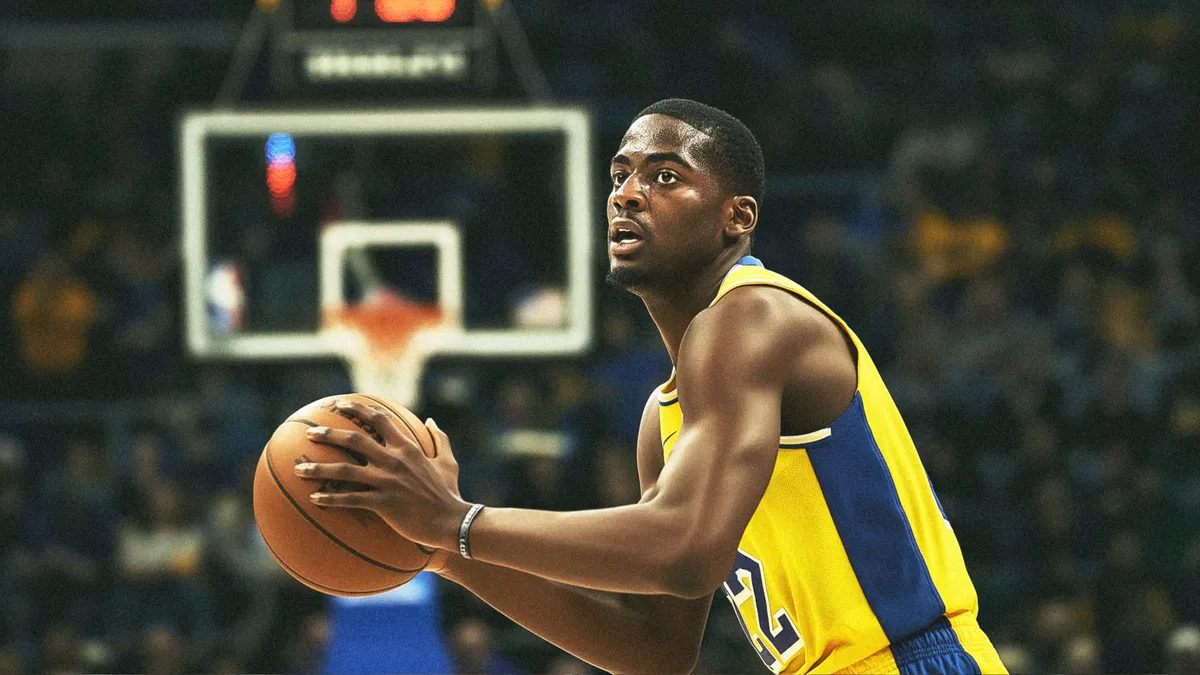
From Philly's Courts to California's Coast: The Warriors' Genesis
The Golden State Warriors boast a storied history that began not in California, but in Philadelphia. Founded in 1946 as the Philadelphia Warriors, the franchise was one of the inaugural teams in the Basketball Association of America (BAA), which would soon become the NBA. Under the guidance of legendary coach Eddie Gottlieb and propelled by star Joe Fulks, the Warriors captured the league's very first championship in the 1946-47 season, immediately establishing a winning tradition. Throughout their tenure in Philadelphia, the team continued to be a significant force, most notably with the acquisition of Wilt Chamberlain in 1959, whose unparalleled scoring dominance captivated the nation. Chamberlain set numerous records, including his iconic 100-point game in 1962, all while wearing a Warriors uniform. However, in 1962, the franchise made a pivotal move, relocating to the West Coast and becoming the San Francisco Warriors, a decision that would forever link them to the burgeoning basketball culture of California. This foundational period laid the groundwork for the future successes and enduring legacy that the team would cultivate in the Golden State, establishing a precedent for innovation and star power.
The Oakland Acclaim: Rick Barry and the 1975 Championship Mirage
Following their move to San Francisco, the Warriors continued to build a competitive team, but true championship glory proved elusive for over a decade. The team rebranded as the Golden State Warriors in 1971, broadening their regional appeal beyond just San Francisco. The mid-1970s marked a golden era, spearheaded by the enigmatic and supremely talented forward Rick Barry. Known for his unorthodox underhand free-throw technique and prolific scoring, Barry led a resilient Warriors squad to an improbable NBA championship in the 1974-75 season. This team, under coach Al Attles, was not considered a favorite but defied all expectations, sweeping the heavily favored Washington Bullets in a stunning upset. The 1975 championship remains one of the most remarkable underdog stories in NBA history and cemented Barry's status as a franchise icon. The Warriors played their home games primarily at the Oakland Coliseum Arena during this period, fostering a deep connection with the East Bay community and establishing a vibrant fanbase that would remain loyal through decades of varying fortunes. This victory was a testament to team chemistry and strategic execution against overwhelming odds.
Run TMC's Fast Break Legacy: A Brief, Brilliant Offensive Revolution
After the highs of the 1970s, the Warriors experienced a period of inconsistency throughout the late 1970s and 1980s. However, the late 1980s and early 1990s brought a thrilling, albeit short-lived, resurgence with the emergence of the "Run TMC" era. This iconic trio consisted of Tim Hardaway, Mitch Richmond, and Chris Mullin, named for their initials and their electrifying fast-paced, high-scoring offensive style. Under the innovative coaching of Don Nelson, the Warriors became a must-watch team, prioritizing offense, constant motion, and an exciting brand of basketball that captivated fans. Hardaway's "killer crossover," Richmond's smooth scoring, and Mullin's pure shooting touch created an offensive juggernaut that regularly lit up scoreboards. While the Run TMC era, unfortunately, did not yield a championship and was ultimately disbanded, it left an indelible mark on the franchise's identity. It showcased the Warriors' potential for dynamic, entertaining basketball and cultivated a generation of fans who appreciated their fearless approach to the game, paving the way for future offensive revolutions.
Navigating the Wilderness: The Pre-Dynasty Era of Resilience
Following the dissolution of Run TMC, the Golden State Warriors entered a prolonged period often referred to as the "wilderness years." For nearly two decades, from the mid-1990s through the early 2010s, the team struggled to find consistent success, enduring numerous losing seasons and failing to make a significant impact in the playoffs. Despite this, the Warriors retained a dedicated fanbase, particularly in Oakland at the Oracle Arena, who yearned for a return to contention. There were flashes of promise, such as the 2007 "We Believe" team, coached by Don Nelson, which, as an 8th seed, famously upset the top-seeded Dallas Mavericks in the first round of the playoffs. This magical run, fueled by players like Baron Davis, Stephen Jackson, and Monta Ellis, proved the resilience of the fanbase and hinted at the potential for future greatness, even in lean times. These years, though challenging, instilled a deep appreciation for the hard work and patience required to build a championship contender, ultimately shaping the mindset that would lead to their future dynasty.
The Blueprint for Greatness: Drafting the Core of a Modern Empire
The true genesis of the Golden State Warriors' modern dynasty began with a series of shrewd drafting decisions that laid the foundation for unparalleled success. In 2009, the Warriors selected Stephen Curry, a relatively undersized guard from Davidson College, with the 7th overall pick. Despite early injury concerns, Curry's unparalleled shooting ability and visionary playmaking would eventually transform the league. This was followed by the selection of Klay Thompson in 2011 with the 11th pick, a sharpshooting guard from Washington State who would become the perfect complement to Curry. The final piece of the core trinity was drafted in 2012, when the Warriors used the 35th overall pick to select Draymond Green, a versatile forward from Michigan State whose defensive intensity, playmaking, and leadership would become indispensable. These three players, alongside astute management decisions and the subsequent hiring of Head Coach Steve Kerr in 2014, formed the unbreakable core that would lead the Warriors to multiple championships, demonstrating a masterclass in talent identification and player development.
The Splash Zone Eruption: Redefining Basketball with the Golden Standard
Under Steve Kerr's innovative coaching and with the "Splash Brothers" (Curry and Thompson) reaching their prime, the Golden State Warriors ushered in a revolutionary era of basketball. Their fast-paced, three-point heavy offense, coupled with Draymond Green's defensive versatility and playmaking, became the envy of the league. In the 2014-15 season, the Warriors captured their first NBA championship in 40 years, defeating LeBron James and the Cleveland Cavaliers. This was merely the beginning. The 2015-16 season saw the Warriors achieve an NBA record 73-9 regular-season record, surpassing the 1995-96 Chicago Bulls. Though they fell short in the NBA Finals that year, their dominance was undeniable. The Warriors' style of play, often featuring a "death lineup" of smaller, versatile players, forced other teams to adapt, fundamentally changing offensive and defensive strategies across the NBA. They elevated the three-point shot from a situational weapon to a primary offensive tool, creating a captivating and dynamic brand of basketball that captivated fans worldwide and established a new "golden standard" for success.
A Reign Extended: The Durant Chapter and Sustained Supremacy
The Golden State Warriors' dynasty reached new heights with the monumental acquisition of superstar forward Kevin Durant in the summer of 2016. Durant's arrival created one of the most formidable lineups in NBA history, adding an elite scoring, shooting, and defensive presence to an already championship-caliber team. With Curry, Thompson, Green, and Durant, the Warriors became virtually unstoppable, winning back-to-back NBA championships in 2017 and 2018, both against the Cleveland Cavaliers. These seasons showcased an unprecedented level of talent and cohesion, as the team executed at an extraordinarily high level on both ends of the court. Durant's integration, while initially challenging, ultimately created a juggernaut that redefined superteams and demonstrated the power of combining multiple generational talents. Even after Durant's departure and subsequent injuries to key players, the core of the Warriors dynasty continued to contend, a testament to the strength of their system and the resilience of their star players.
Chase Center Ascendant: The San Francisco Shift and Continued Excellence
In 2019, the Golden State Warriors embarked on another significant chapter in their history, moving from their longtime home in Oakland's Oracle Arena to the state-of-the-art Chase Center in San Francisco. This move marked a new era for the franchise, bringing them into a cutting-edge facility in the heart of San Francisco's Mission Bay neighborhood. While the initial seasons at Chase Center were impacted by injuries and the COVID-19 pandemic, the Warriors soon reaffirmed their place at the pinnacle of the league. In the 2021-22 season, despite facing adversity and doubts, the Warriors, led by a revitalized Stephen Curry and the enduring brilliance of Thompson and Green, once again ascended to capture their fourth NBA championship in eight seasons. This victory solidified their dynastic status, proving their ability to adapt and triumph even as their core aged. Chase Center quickly became a symbol of this continued excellence, offering a world-class fan experience and serving as the proud new home for a team that consistently pushes the boundaries of what is possible in professional basketball.
Beyond the Game: The Warriors' Enduring Influence on Hoops Culture
The impact of the Golden State Warriors extends far beyond their championships and record-breaking statistics. Their innovative style of play fundamentally reshaped modern basketball strategy, inspiring teams across the league to embrace three-point shooting, pace, and versatile lineups. Stephen Curry, in particular, became a global icon, whose influence on aspiring basketball players around the world is immense, evidenced by the proliferation of young players attempting long-range shots. The Warriors also became a model for how a modern sports franchise can connect with its community and build a global brand. Their commitment to social causes, technological innovation, and engaging content creation has set a benchmark for other organizations. The term "Dub Nation" became synonymous with a passionate, intelligent, and loyal fanbase. The Golden State Warriors have not merely won games; they have revolutionized the sport, captivated audiences, and cemented their place as one of the most influential and beloved franchises in NBA history, continuing to shape the narrative of basketball culture for generations to come.
An Unbreakable Legacy: The Golden State Warriors in NBA Lore
From their humble beginnings as the Philadelphia Warriors to their current status as a global powerhouse, the Golden State Warriors have carved out an unbreakable legacy in the annals of NBA history. Their journey is a tapestry woven with early championships, periods of struggle, and ultimately, a sustained dynasty that redefined the game. The contributions of legendary figures like Wilt Chamberlain, Rick Barry, and the modern triumvirate of Stephen Curry, Klay Thompson, and Draymond Green, along with visionary coaches and front-office personnel, have all played a crucial role in shaping the franchise's identity. They have consistently pushed the boundaries of what is possible on the basketball court, creating memorable moments and inspiring millions. The Warriors' story is one of relentless pursuit of excellence, adaptability, and the power of teamwork. As they continue to compete at the highest level, their place as one of the NBA's most significant and enduring franchises is not just assured, but continuously evolving, leaving an indelible mark on the sport they love.